YEAR
2025
residential
Casa Pinus
LOCATION
Pylaia, Thessaloniki
AREA
300 m²
STATUS
Completed
The reconstruction of the two-storey house in Pylaia, Thessaloniki, is approached not as a purely technical intervention, but as an act of renegotiating dwelling.
This project is a deliberate and uncompromising architectural gesture. It begins with the acknowledgment that the existing 1970s house could no longer support contemporary modes of living. The original shell was not treated as a framework to be adapted, but as a condition to be critically confronted and ultimately brought to an end.
Modernization here is not cosmetic—it is intentional and radical. Through decisive acts of subtraction, reconfiguration, and opening, the project rejects introversion and embraces extroversion, fluidity, and a direct relationship with the landscape. The house is no longer an object of preservation, but a spatial manifesto: a conscious break from outdated domestic models and a redefinition of dwelling as an open, experiential, and contemporary condition.
The existing building, dating back to the 1970s, bore the traces of another era—an inward-looking architecture structured around the notion of the “hearth” as a core of protection and daily life. Positioned at the highest point of a sloping pine forest, it appeared to withdraw from view, revealing itself gradually and emitting a quiet, almost cinematic sense of nostalgia.
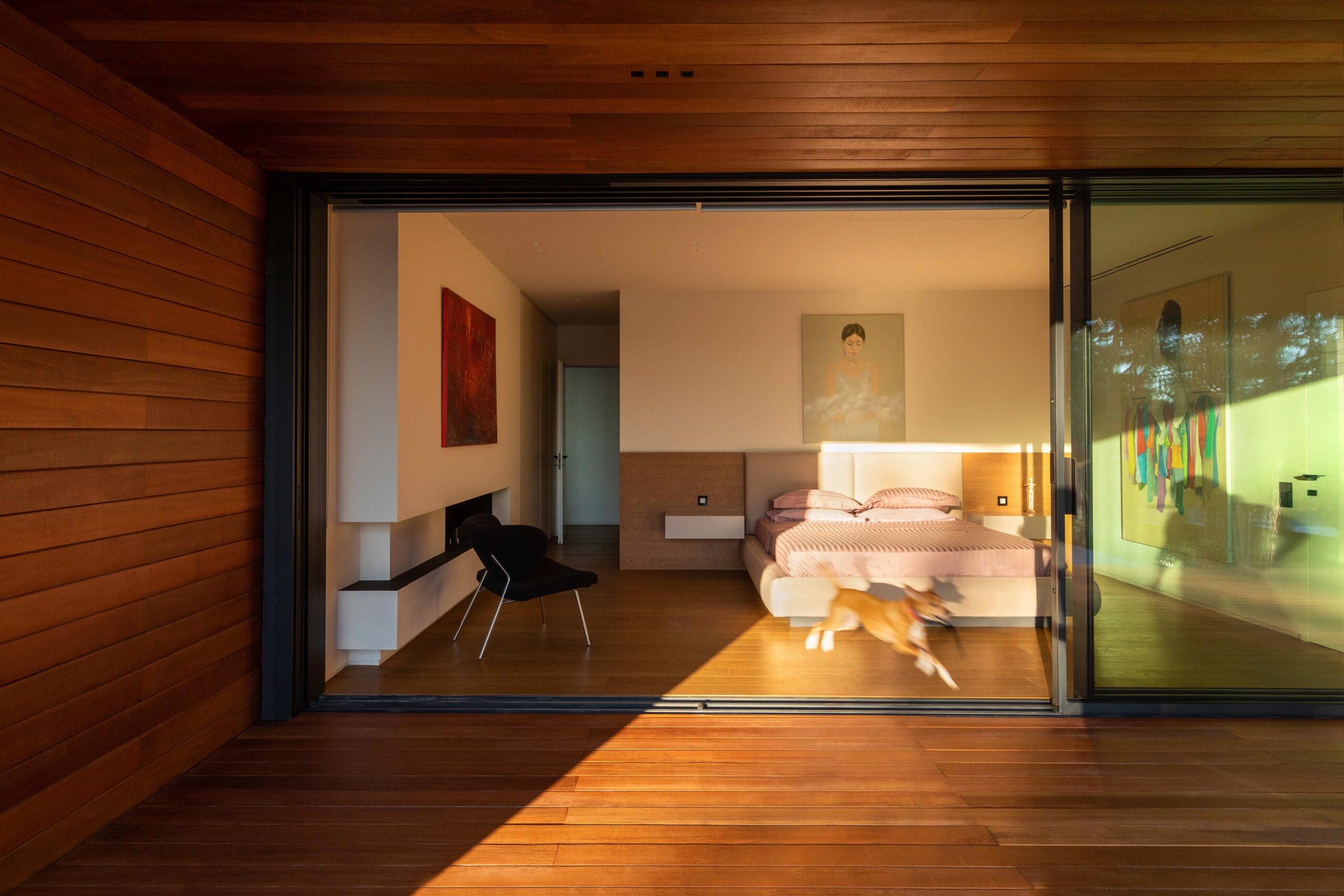
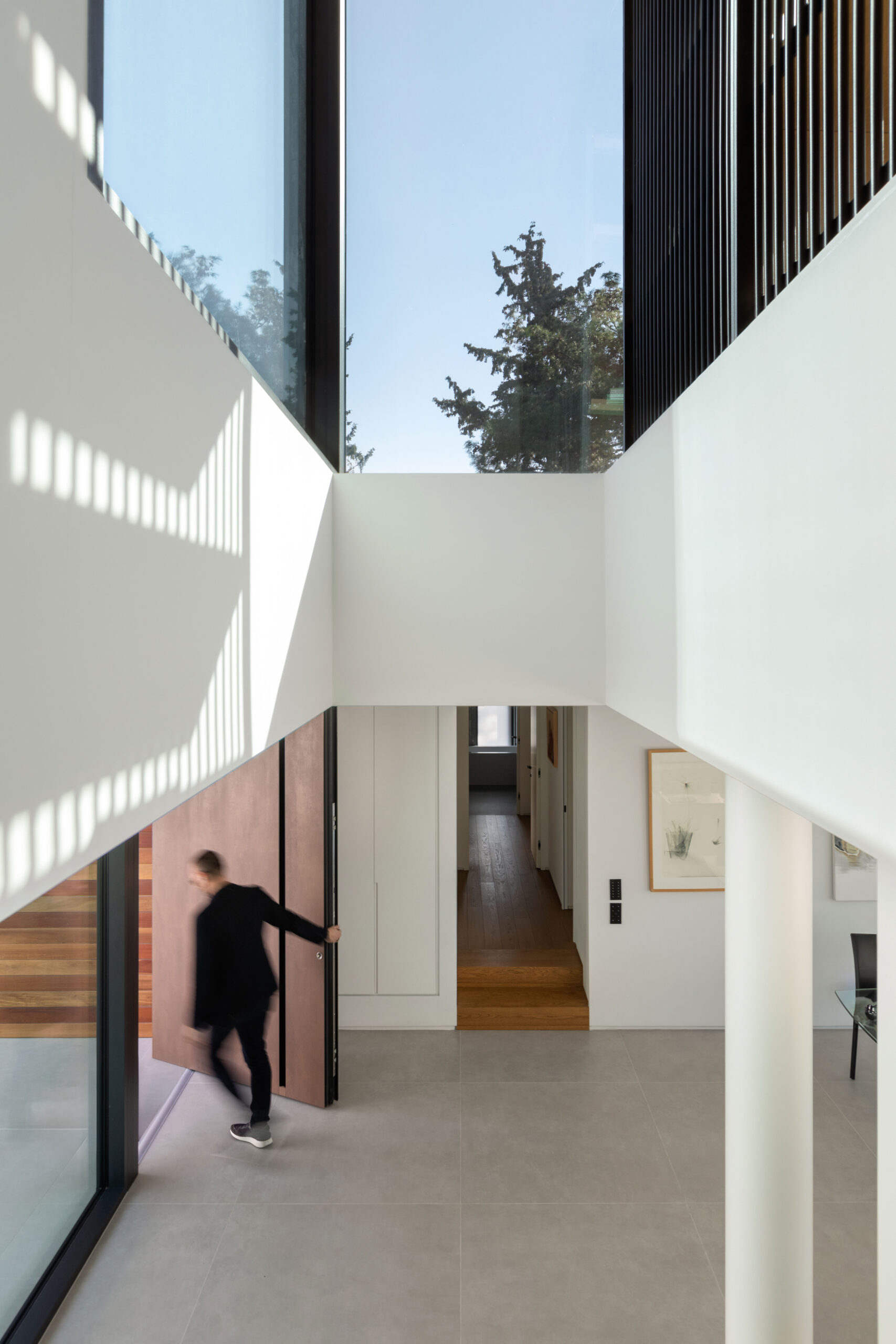
Contemporary dwelling, however, tends to move away from the closed, centralized core, embracing extroversion, fluidity, and a more open relationship with its surroundings. The architectural proposal responds to this shift by preserving elements of the original shell—most notably its strong horizontal emphasis—while reconfiguring the building through selective acts of subtraction. The house opens itself to the landscape, embracing the 360-degree views and repositioning the human experience at the center of spatial perception.
The new architectural composition is formed by two linear volumes and a third, vertical element, operating less as rigid objects and more as spatial traces. Transparency and cross-ventilation dissolve the boundaries between interior and exterior, allowing the natural environment to permeate everyday life. The house ceases to function as an object and instead becomes an experience—an intermediate condition between landscape and memory.
Material choices function as narrative tools. Wood, reintroduced through details and textures drawn from the pre-existing building, bridges past and present and lends continuity to the spatial narrative. Through this subtle dialogue with its context, the house does not seek to impose itself upon the landscape, but rather to belong to it—as if it had always been there, a quiet yet contemporary presence.
Photography: Mariana Bisti